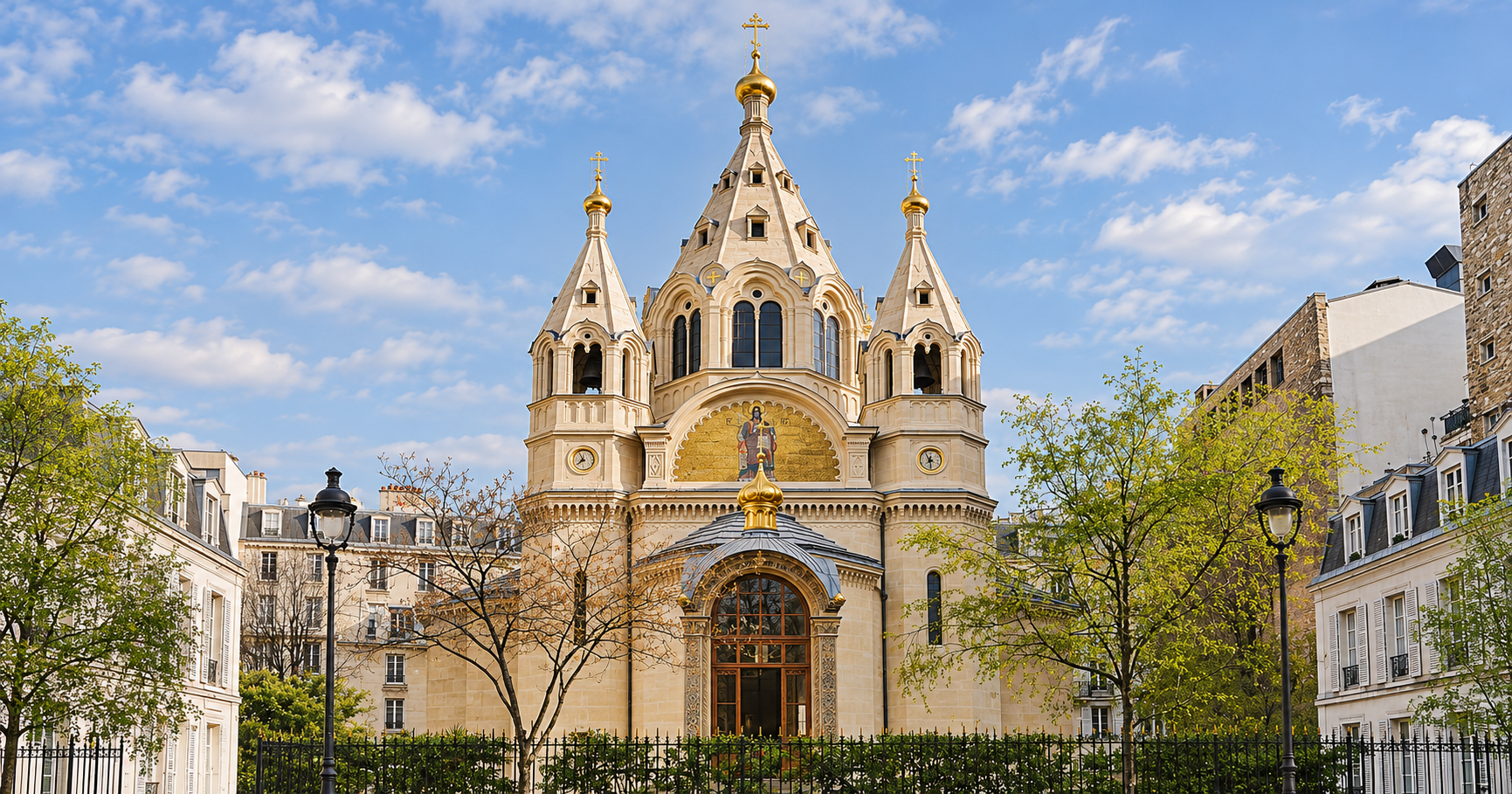
Before the stonework, the mosaics and the services, the church needed a place to stand. The rediscovered documents take us back to that beginning, when the future landmark was still a project taking shape through plans, negotiations and contracts.
A Plot, a Plan and a Vision
According to published accounts of the discovery, the first deed, dated 29 October 1857, records the sale of more than 2,000 square metres of land to the Embassy of the Russian Empire. The plot was on Rue de la Croix-du-Roule, now known as Rue Daru.
Count Pavel Kiselyov, then Russia’s ambassador to France, signed the contract on behalf of the embassy. A detailed plan accompanies the document, tracing the boundaries of the site before it acquired its familiar silhouette.
A second notarial deed, drawn up in 1858, records a further acquisition. Together, the two documents show that securing the land was a process carried out in successive stages.
Behind the Landmark, a Sequence of Decisions
The church was consecrated in September 1861. The deeds of 1857 and 1858 document steps that preceded its construction.
Reports of the discovery also describe receipts and supplementary agreements. Read alongside the deeds, these records help reconstruct the chronology of the transactions and bring the people involved into focus.
A date, a name, a boundary on a plan: each detail adds something tangible to the history of the site. What we see today as a single architectural landmark emerges from the archives as the result of many individual decisions.
Alain Banon and Sylvia Dutto: Bringing the Records to Light
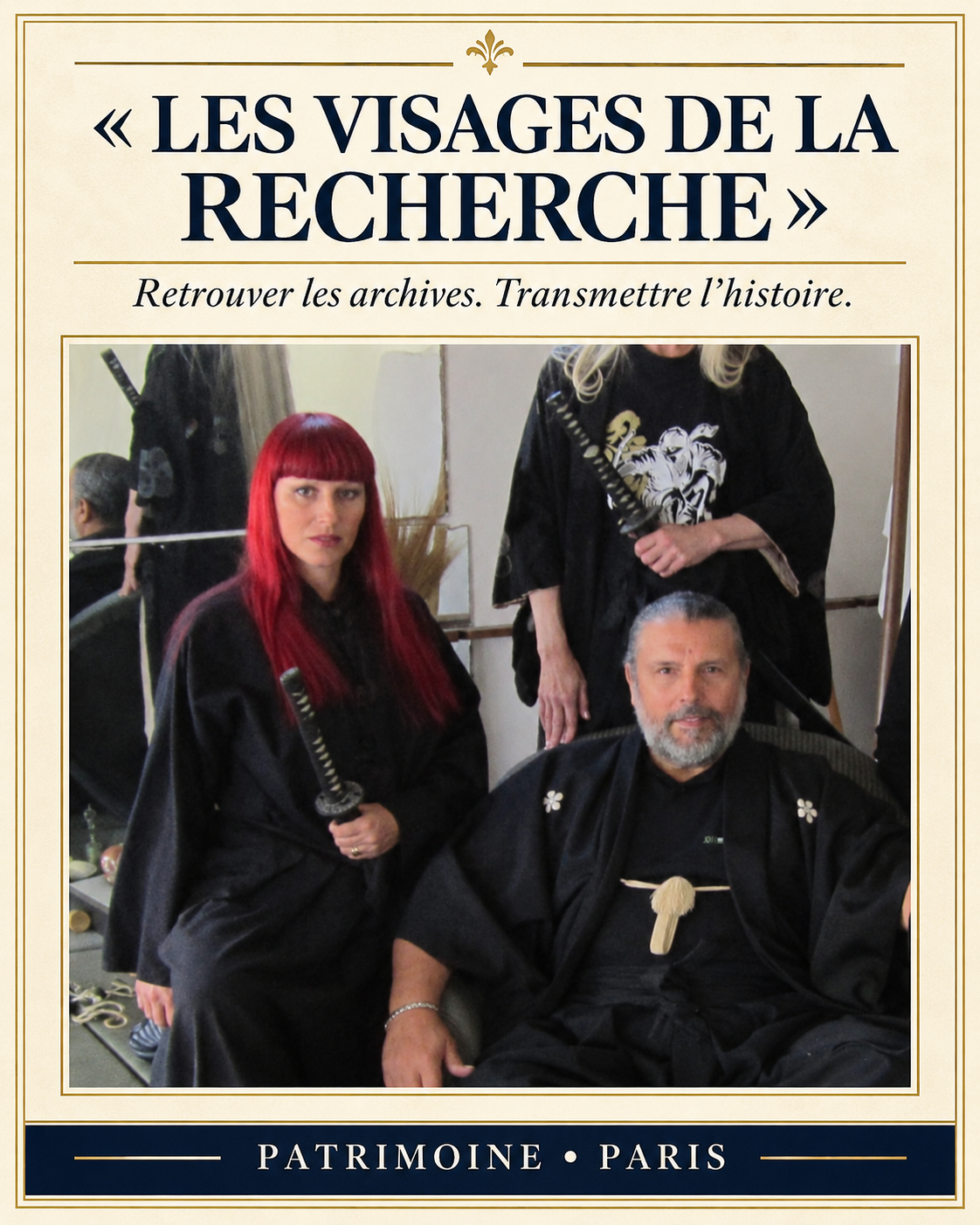
The discovery is credited to independent researchers Alain Banon and Sylvia Dutto. Their work highlights the contribution that independent research can make to understanding and preserving cultural heritage.
Finding a document is only the beginning. Deciphering its text, establishing its context and making it accessible allow others to examine the evidence and continue the research. The digital reproductions and transcriptions mentioned in published reports offer readers and researchers that opportunity.
Presented by the Diocese of Chersonese and reported by outlets including Patriarchia.ru, the discovery invites us to look at the cathedral on Rue Daru with fresh eyes.
The next time we look up at its domes, we might also picture what came before them: a plot of land, a plan and two signatures.
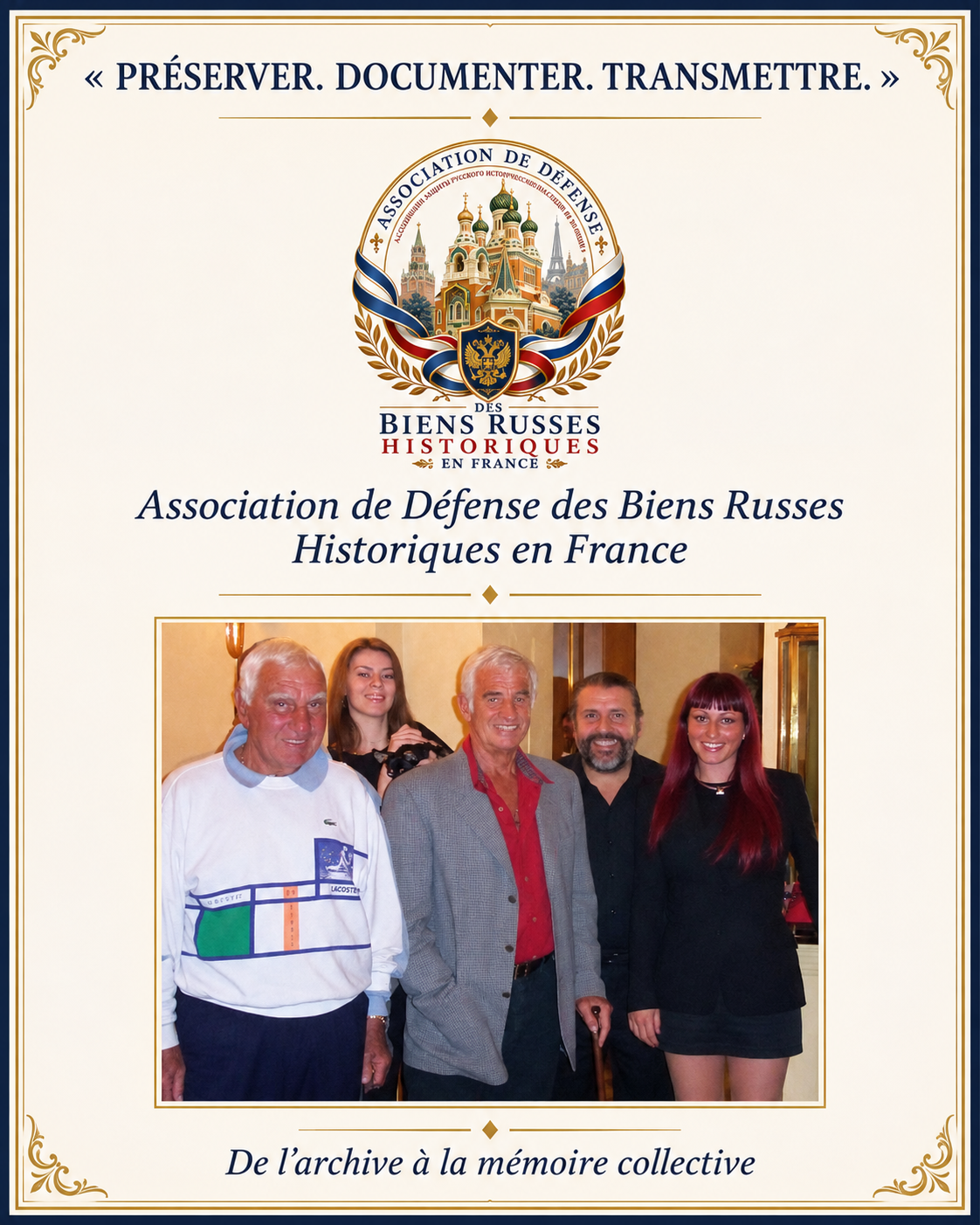
Stone makes the past visible. Archives let us read it.
Sources and Editorial Note
- Diocese of Chersonese — reference publication: https://cerkov-ru.com/fr/actualites/2026/10/2309-daru
- Patriarchia.ru — report on the discovery: https://patriarchia.ru/article/123673
- Additional report, 1 November 2026: https://gorthodox.com/en/news-item/v-parizhe-najdeny-arhivnye-dokumenty-ob-istorii-aleksandro-nevskogo-sobora
Prepared for the Press section of the website, based on published reports, supplied information and clarifications provided by Alain Banon, with AI-assisted editorial support.
This article addresses the historical and documentary significance of the rediscovered material. It draws no conclusions about the cathedral’s present legal status.

Anna Vernov’s honorary doctorate nomination

Queen Magazine

BEST BUSINESS AWARDS 2023

ВФМ 2024

Marseillaise from Donbass


“If you sharply grab onto a dream, you can destroy everything”
The names of the winners of the International Best Business Awards

Where to go in autumn in St. Petersburg, top 5 places

The heroine’s journey

Can Sony and other brands return to Russia and when?

What will your musical preferences tell you about your psychological profile?

Characteristics of creating and promoting a personal brand of a creative person.

Connection to France Media from September 2022